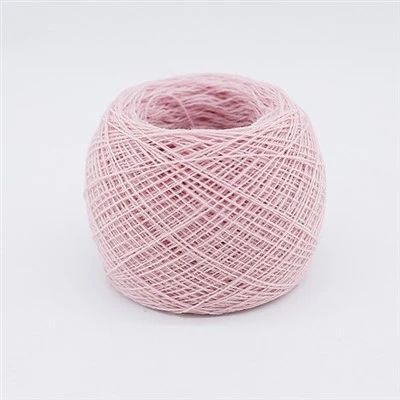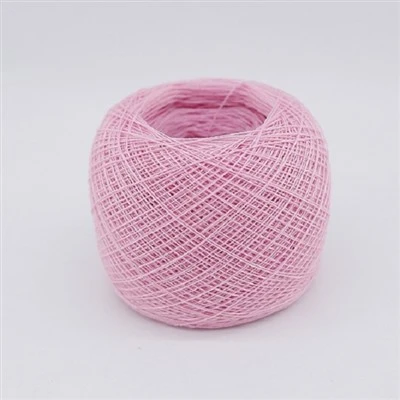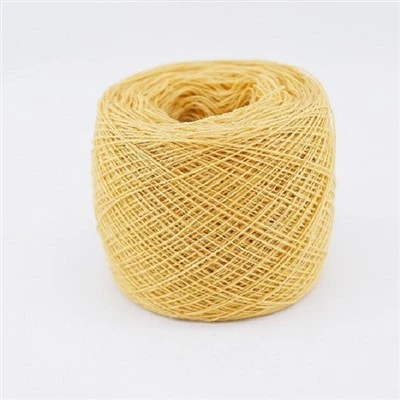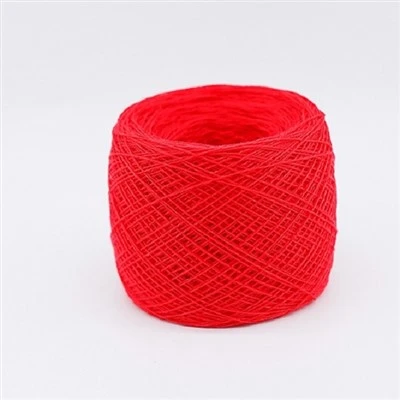

Fancy yarns refer to a category of yarns with special structures and appearances, produced using special raw materials, equipment, or processes during spinning and yarn making. Their raw materials encompass natural fibers (such as silk, spun yarn, cotton yarn, and linen yarn) and chemical fibers (such as rayon, synthetic fibers, metallic threads, and blended yarns). Various fibers can be used individually or in combination to achieve specific properties. Fancy yarns (bicomponent yarns, mixed-color spun yarns) and fancy yarns (knot yarns, slub yarns, etc.) can be produced using ring spinning machines, while overfeed (boucle yarns, wave yarns), controlled (knot yarns, slub yarns), and composite fancy yarns can be produced using hollow-spindle fancy twisting machines. The structure typically consists of a core yarn (providing strength), decorative yarns (forming patterns), and fixing yarns (maintaining the structure).
Common varieties include slub yarn (characterized by segment thickness, segment length, and segment pitch), knotted yarn (single-color or two-color wound yarn), boucle yarn (regular or gradient loops), and chenille yarn (fluffy structure). Processing methods are categorized into products from ordinary spinning systems, dyed fancy yarns, fancy twisting machine-processed types, and special types using dedicated equipment. Boucle yarn typically has a linear density of 67–670 tex and can be used to create knitted and woven fabrics of various styles by changing raw materials and processes. Some products incorporate innovative designs such as aluminized gold and silver threads or sequined butterfly yarn, and are widely used in apparel, home textiles, and decorative items.